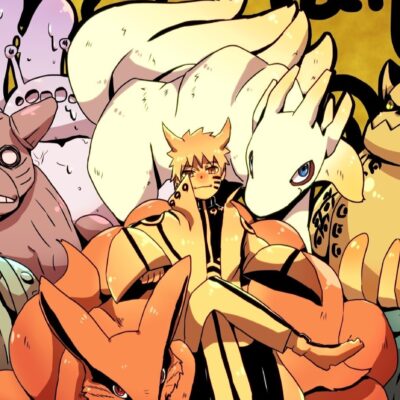






The battlefield smelled of sulfur and scorched earth.
Issei Hyoudou — second-year student at Kuoh Academy, Red Dragon Emperor, proud member of Rias Gremory’s peerage — was losing.
That was not something he admitted easily. In fact, “losing” was a word Issei had trained himself to replace with phrases like “strategically disadvantaged” or “temporarily overwhelmed.” But right now, with three of his ribs cracked, his Scale Mail armor fracturing at the joints, and a Stray Devil the size of a small building bearing down on him, even his legendary optimism was struggling to find purchase.
“Ddraig,” he gasped, one knee pressed into the rubble of what had once been a warehouse district on the outskirts of Kuoh. “How are we looking?”
Terrible, partner, the Welsh Dragon rumbled from within the sacred gear on his arm. Your output is at thirty-two percent. One more hit like the last one and the armor fails completely.
“Great. Fantastic. Love that for us.”
The Stray Devil — a massive creature that had once been a mid-ranked devil who lost control of his power — roared and raised a fist the size of a small car. Issei had been tracking it for two days. He had expected backup. Backup had not arrived. A communication disruption hex had cut him off from Rias, from Akeno, from everyone.
So here he was. Alone. Outmatched.
The fist came down.
Issei threw his arms up, channeling what remained of his boosted gear into a desperate shield. He felt the impact travel through every bone in his body. The ground beneath him cracked. He slid back fifteen feet, gouging twin trenches in the concrete.
Armor integrity: critical, Ddraig reported, with what Issei could only describe as genuine concern for a dragon. One more hit, Issei. That is all it will take.
The Stray Devil leaned down, its enormous face filling Issei’s blurring vision. Hot, rancid breath washed over him. The creature’s eyes — once human, now nothing but hollow, hungry voids — fixed on him with the blank satisfaction of something that had forgotten what mercy was.
Issei thought, in that strange slow-motion way that extreme danger sometimes produced, about his parents. About the familiar smell of his mother’s cooking. About his father’s awkward attempts at life advice. About Rias’s red hair catching the morning light. About his friends.
Not yet, he told himself. Not like this.
He tried to stand. His legs didn’t cooperate.
The creature raised its fist again.
And then something dropped from the sky like a black comet.
The impact was enormous — a shockwave that sent loose debris flying in every direction and staggered the Stray Devil backward three full steps. Where there had been empty air above Issei, there was now a figure standing between him and the monster: tall, composed, dressed in a black kimono that moved like smoke in the disturbed air. Silver-streaked black hair cascaded down a graceful back. A cat’s tail swayed with lazy, dangerous ease.
Kuroka turned her head just slightly, enough for Issei to catch her profile. She looked almost bored.
“Nya,” she said softly, almost to herself. Then she raised one pale hand toward the Stray Devil and spoke a single word of Senjutsu that hit the creature like a physical wall.
The Stray Devil stumbled. Its movements became sluggish, uncoordinated. Kuroka had disrupted its life energy flow — not dramatically, not with any explosion or flash of light, just with a precise, almost surgical application of natural energy that left the creature confused and slowed.
She glanced back at Issei over her shoulder. Her golden eyes caught the dim light of the overcast sky above.
“You look terrible, Sekiryuutei.”
“I’ve had better afternoons,” Issei admitted, trying again to push himself upright and managing, this time, to get to one knee. “What are you doing here, Kuroka?”
“Saving your life, obviously.” She said it the way someone might say passing the salt — matter-of-fact, slightly impatient, as though the answer should have been self-evident. “You can thank me later. Right now, stay down and try not to bleed on anything important.”
She turned back to the Stray Devil, which had recovered enough of its coordination to charge at her. Kuroka didn’t move. She stood perfectly still until the creature was almost upon her, and then she moved — not running, not leaping, but flowing, the way water finds the path of least resistance through stone. She was simply somewhere else when the blow landed, and then she was at the creature’s side, pressing her palm flat against its enormous ribcage.
What happened next was quiet. There was no explosion. No dramatic surge of power. Just Kuroka closing her eyes for a moment, her lips moving in something too soft to hear, and the Stray Devil going very, very still.
When she removed her hand, the creature sank to its knees. Its eyes — those awful empty eyes — blinked once. Something moved across its face that might, in another life, have been recognition. Then it collapsed forward and was still, its corrupted power dissipating into the air like smoke.
Silence returned to the ruined warehouse district.
Kuroka stood in the middle of it all, completely unhurried, brushing a nonexistent speck of dust from her kimono sleeve. Then she walked back to where Issei was still kneeling in his fractured Scale Mail and looked down at him with an expression that was half amusement and half something harder to name.
“How?” Issei managed. “That thing was—”
“Strong? Yes.” She crouched down to his level with the fluid grace of a cat settling onto a warm windowsill. “But strength is not the only thing that matters in a fight, Sekiryuutei. You of all people should know that by now.” Her golden eyes moved across his battered armor with what looked, despite her casual tone, like genuine assessment. Checking for serious damage. “Can you walk?”
“Probably. Give me a minute.”
“You have about three before the residual dark energy from that creature starts affecting the area. So perhaps prioritize.”
Issei gritted his teeth and stood. The Scale Mail dissolved as he released it, leaving him in his Kuoh Academy uniform — torn, bloodstained, and considerably worse for wear. The world tilted slightly. He planted his feet and waited for it to settle.
Kuroka watched him without moving to help, but she also didn’t move away. She stayed close enough to catch him if he went down again, though her expression made it clear she would prefer he didn’t.
“Why?” Issei asked.
She raised an eyebrow. “Why what?”
“Why did you save me? You’re…” He paused, trying to find a diplomatic phrasing. “You’re not exactly on the Gremory side of things.”
Kuroka was quiet for a moment. The wind moved through the ruined district, stirring her hair. Her tail swayed once, then stilled.
“I had my reasons,” she said finally. “And before you ask — no, I’m not going to explain them while you’re standing in a puddle of your own blood looking like you lost an argument with a building.” She straightened up and looked at the darkening sky. “There’s a safe location two blocks north. I know the area. Can you make it that far?”
Issei looked at her — really looked at her. Kuroka, the S-class Stray Devil. Koneko’s older sister. One of the most dangerous Nekoshou alive, and a woman with a past complicated enough to fill several books. She had just saved his life without being asked, without any obvious benefit to herself, and was now offering him shelter.
His instincts, which had kept him alive through two years of devil politics and supernatural combat, were not raising any alarms. If anything, they were doing the opposite.
“Yeah,” he said. “I can make it.”
Something shifted in her expression — subtle, almost invisible, but Issei caught it. The faintest easing of tension around her eyes.
“Good,” she said simply. And she started walking north.
Issei fell into step beside her, and tried to ignore the fact that every breath still hurt, and that the woman walking next to him — composed, dangerous, and entirely unreadable — had appeared out of nowhere to pull him back from the edge of something permanent.
He had questions. A lot of them.
But as Kuroka had said — there would be time for that later.
For now, he was alive.
That was enough.
The safe house was not what Issei had expected.
He had imagined something sparse and utilitarian — a hideout, the kind of place someone on the run would use. Four bare walls, a mattress on the floor, maybe a single bulb hanging from the ceiling. The sort of location that announced temporary in every detail.
Instead, Kuroka led him to a small apartment above an abandoned tea shop, and the moment she pushed the door open, warmth spilled out into the cold evening air. The space was modest but lived-in — a low table in the center of the main room, cushions arranged around it, shelves along one wall holding an assortment of items that ranged from old books to small charms made of twisted silver wire. A single lamp in the corner cast everything in amber.
It smelled faintly of green tea and something herbal that Issei couldn’t identify.
“Sit,” Kuroka said, already moving toward a small kitchen alcove at the far end of the room.
Issei sat, mostly because his legs were still making it clear they had opinions about the evening’s events. He looked around the apartment while the sounds of water running and cabinet doors opening came from the kitchen. There were no photographs. No obvious personal items. But the space had a quality of habitation that went beyond mere function — small details that suggested someone had been here long enough to care about it, even slightly.
Kuroka returned with a ceramic bowl of hot water, a cloth, and a small wooden box that she set down on the table in front of him without ceremony.
“Take the jacket off,” she said.
“It’s fine, I—”
Her golden eyes fixed on him flatly.
He took the jacket off.
The damage was more visible without it. Three deep bruises along his left side, already turning spectacular colors. A gash along his right forearm from where a piece of debris had caught him. Various smaller cuts and scrapes that he had stopped noticing hours ago.
Kuroka looked at all of it with the same calm, assessing expression she seemed to apply to most things. Then she opened the wooden box, which turned out to contain a small collection of medicinal items — not conventional medicine, but devil-adjacent remedies, the kind that worked on supernatural physiology. She selected what she needed without hesitation.
“You do this a lot?” Issei asked, watching her work. “Patch people up?”
“I do a lot of things.” She dipped the cloth in the hot water and began cleaning the gash on his forearm with efficient, impersonal movements. “Hold still.”
“I am holding still.”
“You’re talking. That counts as not holding still.”
Issei closed his mouth. Kuroka worked in silence for a moment, and he used the quiet to study her — not in any inappropriate way, but in the careful manner he had learned to observe people who mattered to understanding a situation. She was focused entirely on what she was doing. Her hands were steady. Whatever she was thinking, she wasn’t broadcasting it.
“How did you find me?” he asked, when she seemed to have settled into a rhythm that suggested talking wouldn’t actively disrupt her work.
She was quiet for a beat. “I’ve been keeping an eye on certain areas around Kuoh. That warehouse district has been a problem for weeks — unusual dark energy readings, signs of a Stray Devil operating in the area. I was tracking it independently.”
“And I just happened to be there.”
“You just happened to be there getting yourself killed, yes.” A pause. “The communication disruption was deliberate. Whoever set up that Stray Devil’s territory wanted to make sure any devil who wandered in couldn’t call for help.”
Issei frowned. “You’re saying someone set a trap.”
“I’m saying the situation had the shape of a trap. Whether you were the specific target or simply unlucky is a question worth asking.” She set down the cloth and reached for something from the wooden box — a small vial of something that looked like pressed silver liquid. “This will sting.”
It did. Issei managed not to make an undignified noise, which he considered a personal victory.
“Thanks,” he said, when she had finished with the forearm and moved on to assessing the bruising along his ribs.
Kuroka glanced up at him briefly. “For the warning or the treatment?”
“Both. And for earlier.” He met her eyes. “Seriously, Kuroka. You saved my life. That’s not something I take lightly.”
Something moved across her face — that same subtle shift he had noticed in the warehouse district. She looked back down at his ribs before he could read it properly.
“You would have found a way,” she said, which was not quite an acknowledgment and not quite a deflection.
“I really don’t think I would have.”
She pressed two fingers carefully against his left side, and he winced. “Two cracked,” she confirmed. “Not broken. You’ll heal faster than a human would, but you shouldn’t be fighting again for at least two days.”
“Rias is going to—”
“Yes, I imagine Lady Gremory will have significant feelings about this situation.” Kuroka sat back and began returning items to the wooden box with precise, unhurried movements. “About the Stray Devil, about you being injured, and almost certainly about where you spent the night.”
Issei blinked. “About where I—” He looked at the window, where full dark had settled over the city outside. He had lost track of time entirely. “How long was I out there?”
“You’ve been fighting since approximately four in the afternoon. It is now past nine.” She closed the wooden box. “The communication hex will dissipate on its own by morning. Until then, trying to reach your peerage is unlikely to be productive.”
“So I’m stuck here.”
“Unless you would prefer to wander Kuoh with cracked ribs in the dark.” She rose smoothly, picking up the bowl and cloth. “There’s a spare room. It’s not luxurious.”
“I’ve slept in worse places.” He paused. “Actually that’s not true. I’ve had a pretty comfortable life on the sleeping front.” He looked at her. “Why do you have a spare room?”
Kuroka, heading back toward the kitchen, paused in the doorway without turning around. “Because sometimes useful things are worth maintaining even before you know what use you’ll put them to.” Then she continued into the kitchen, and the sound of water running resumed.
Issei sat at the low table, ribs aching, mind working.
He didn’t sleep well, which was not surprising given the circumstances. The spare room was small and simply furnished — a futon, a folded blanket, a narrow window that looked out over the dark street below. He lay on his back staring at the ceiling for a long time, listening to the building settle around him and thinking about traps and Stray Devils and unexpected rescues.
Around midnight, he heard movement in the main room and found, when he carefully made his way out, that Kuroka was sitting at the low table with a cup of tea, several old books open in front of her, and an expression of focused concentration that suggested she had been there for some time. Her tail moved in slow, thoughtful arcs.
She looked up when he appeared. No surprise. She had probably heard him moving around in the spare room for the past three hours.
“Can’t sleep?” she asked.
“Ribs,” he said, which was partially true.
She nodded at the cushion across the table from her. He sat. She rose and came back a minute later with a second cup of tea, which she placed in front of him without asking if he wanted it.
He wrapped his hands around the warmth of the cup and looked at the books open on the table. Senjutsu texts, from the look of them — dense with diagrams and notation systems he only partially recognized from his own limited training.
“You study even when you’re…” He gestured at the room. The safe house. The situation.
“Especially then.” She settled back into her own seat and turned a page. “Staying sharp requires continuous attention. You don’t get to take breaks from improvement just because circumstances are inconvenient.”
“That’s a pretty demanding way to live.”
“Perhaps.” She glanced at him. “But I think you understand it. You didn’t become what you are by waiting for convenient moments to train.”
He looked at her over his tea cup. “You know a lot about me.”
“You’re the Sekiryuutei. You’re not exactly obscure.” A pause. “And I pay attention to things that matter.”
“Do I matter?”
The question came out more direct than he had intended. Kuroka looked at him steadily for a moment.
“You have the potential to matter a great deal,” she said. “To a lot of people and to the balance of power in this world. Whether you live up to that potential depends on whether you survive long enough to do so.” The ghost of something that wasn’t quite a smile crossed her face. “Hence this evening.”
“That’s a very logical reason to save someone’s life.”
“I’m a very logical person.”
Issei wasn’t sure he believed that entirely. Logical people didn’t maintain spare rooms in safe houses. Logical people didn’t make tea for guests they claimed to have helped for strategic reasons.
But he didn’t push it. Instead he drank his tea and let the quiet settle between them, and found, to his mild surprise, that it was not an uncomfortable quiet. Kuroka read her texts. Issei sat with his thoughts. The city outside was dark and still.
After a while he said, “Koneko doesn’t know you like this.”
Kuroka’s hand stilled on the page for just a moment. “Shirone knows what she needs to know about me.”
“She thinks you’re—” He stopped himself.
“Dangerous? Selfish? A criminal?” Kuroka’s voice was even. “She’s not wrong about any of those things. History doesn’t stop being true because it becomes inconvenient.” She turned the page. “But people are more than their history. Even if the people who know their history find that difficult to accept.”
Issei was quiet for a moment. “She loves you. Underneath everything.”
Kuroka said nothing. But her tail, he noticed, had gone very still.
“I just thought you should know that,” he said. “In case it matters.”
Another silence. Then, quietly: “Go back to sleep, Sekiryuutei. Your ribs need the rest even if you don’t.”
He went. But as he settled back onto the futon in the spare room, he heard, faintly, the sound of a page turning in the main room. And then, even more faintly, something that might have been a slow exhale. The kind that comes after holding something for a very long time.
Morning arrived gray and soft through the narrow window.
Issei woke to find the communication hex had lifted — he could feel the return of familiar presences at the edge of his awareness, the subtle devil-sense that connected him to his peerage. And with their return came the immediate, unmistakable signature of Rias Gremory being very, very worried and doing her best not to show it.
He found Kuroka in the main room, the books put away, the table clear. She had made rice and miso. She set a bowl in front of him as he sat down with the same matter-of-fact efficiency as everything else she did, then sat across from him with her own bowl.
They ate in companionable silence.
“I need to contact Rias,” he said, when the bowls were empty.
“I assumed you would.” She collected the bowls and carried them to the kitchen. “There’s a clear route east that avoids the residual dark energy zones. I’d recommend taking it.”
He stood, and looked at her as she came back from the kitchen. In the morning light, the apartment looked different — quieter, somehow, smaller. She looked different too. Less like the dangerous Stray Devil of reputation and more like someone who had spent a long night alone with her books and her thoughts and her carefully maintained silences.
“Come with me,” he said.
She stopped. “What?”
“To Rias. To the mansion.” He could see the refusal already forming in her expression and kept talking. “You said yourself that Stray Devil situation looked like a trap. If someone is setting traps in Kuoh, the Gremory household should know. You have information that’s relevant.”
“The Gremory household is not going to welcome me with open arms, Sekiryuutei.”
“Probably not. But they’ll listen to me. And I’ll make sure they listen to you.” He paused. “Whatever else last night was, you helped me. The least I can do is make sure you’re not navigating whatever this is alone.”
Kuroka looked at him for a long moment. Her golden eyes were unreadable in the way that, he was beginning to understand, meant she was actually thinking very hard about something rather than dismissing it.
“You trust too easily,” she said finally.
“Maybe.” He shrugged, carefully, because of the ribs. “Or maybe I’m a decent judge of character. Come with me, Kuroka.”
Another long moment.
Then she crossed the room, picked up a small bag from beside the door that looked as though it had been packed and ready for some time, and said: “If anyone tries to exorcise me, I’m leaving and this alliance is over.”
“Completely fair,” Issei said.
And they walked out into the morning together.
The Gremory mansion sat at the edge of Kuoh like a quiet authority — large enough to command respect, old enough to suggest permanence. Issei had walked through its gates hundreds of times and never quite lost the sense that the building itself was watching, evaluating, deciding whether you belonged.
Today, standing at those gates with Kuroka beside him, he felt that sensation more acutely than usual.
The gate wards reacted to her presence before they were halfway up the path. He felt them flare — ancient devil detection arrays woven into the stone pillars, designed to flag anything that didn’t belong. Kuroka didn’t slow her pace. She walked with the composed, unhurried confidence of someone who had long since stopped being surprised by the world’s hostility toward her and had decided to find it mildly tiresome rather than distressing.
“Here we go,” Issei muttered.
The front door opened before they reached it.
Rias stood in the doorway.
She looked at Issei first — a rapid, thorough assessment that started at his face and worked its way down, cataloguing damage, checking for serious injury, doing in three seconds what would have taken a doctor several minutes. He watched the worry shift into relief shift into something that was not quite anger but lived in the same neighborhood.
Then her eyes moved to Kuroka.
The relief did not survive the transition.
“Issei.” Her voice was carefully level. “You’re injured.”
“Cracked ribs. I’m fine. Kuroka—”
“I can see who is standing next to you.”
Kuroka met Rias’s gaze with complete equanimity. “Lady Gremory.”
“Kuroka.” The name came out measured and precise. “This is unexpected.”
“I imagine it is.”
From behind Rias, other presences were gathering — Issei could sense them before they appeared. Akeno, her expression shifting from relief to wariness as she took in the scene. Kiba, hand not quite on his sword but not quite away from it either. And then, smaller, quieter, Koneko — who stopped completely when she saw her sister standing in the morning light at the end of the path.
The silence that followed was the complicated kind. The kind that had years of history compressed into it.
Issei stepped into it before it could solidify into something permanent. “She saved my life last night. The Stray Devil situation was a trap — communication hex, isolated location, deliberate setup. Kuroka has information about what’s been happening in that district. I asked her to come.”
Rias looked at him for a long moment. Whatever she was thinking moved through her expression too quickly to follow.
“Come inside,” she said finally. And she stepped back from the doorway.
They sat in the large receiving room — the formal one, which Issei privately felt said something about the occasion. Kuroka took the seat offered to her without comment, set her small bag beside her feet, and folded her hands in her lap with the patience of someone accustomed to being assessed by rooms full of people who weren’t sure whether to trust her.
Issei sat nearby. Not beside her in any pointed way, but close enough to make clear that his endorsement of her presence was not a minor or reluctant thing.
Koneko sat at the far end of the room. She had not looked directly at Kuroka since they came inside.
Rias took the seat across the table and looked at Kuroka with the particular quality of attention that Issei associated with her at her most serious — not hostile, not warm, but precise. The eyes of someone who was genuinely trying to read a situation accurately.
“Tell me about the warehouse district,” she said.
Kuroka told her.
She was thorough and organized, presenting information in a clean sequence that suggested she had been assembling and ordering it for some time. The dark energy readings she had been tracking for three weeks. The pattern of the Stray Devil’s movement — not random, not the disorganized behavior of a devil who had simply lost control, but something structured, deliberately maintained. The communication hex, which she described in technical detail that made Akeno lean forward slightly with professional interest. The fact that the trap’s design suggested it had been prepared by someone who understood devil detection systems well enough to work around them.
“Someone with inside knowledge,” Rias said, when Kuroka paused.
“That’s my assessment, yes.”
“Of what level?”
“Mid to upper. Not Maou-level, but not a minor devil either. The hex work alone requires significant skill.”
Rias was quiet for a moment, thinking. “Why were you tracking the district independently? What was your interest in it?”
Kuroka met her gaze steadily. “I’ve been tracking unusual devil activity around Kuoh for two months. Not on anyone’s orders. Independently.” A pause. “I have reasons to care about what happens in this city.”
The room was quiet. Everyone understood what those reasons were without her having to say it.
Koneko, at the far end of the room, made a small, barely audible sound that wasn’t quite a word.
“You could have brought this information to us weeks ago,” Akeno said. Her voice was pleasant and measured, which with Akeno meant very little about her actual feelings.
“I could have,” Kuroka agreed. “I had no particular reason to believe I would be received with the level of good faith that useful information exchange requires. Last night changed the calculation.”
“Because you saved Issei.”
“Because doing so demonstrated, I hoped, that my presence here today was not adversarial.” She looked at Rias. “I have no interest in conflict with the Gremory household, Lady Gremory. I never particularly did. History is more complicated than interest.”
Rias studied her. Then she looked at Issei, and something passed between them in the silent shorthand they had developed over two years — the quick exchange of assessment and trust that their relationship had built.
He gave a small nod.
Rias looked back at Kuroka. “We’ll look into the warehouse district situation. I’d like you to share everything you’ve documented — readings, dates, locations.” She paused. “And I think you and I should speak privately. Later.”
Kuroka inclined her head. “As you wish.”
The private conversation between Rias and Kuroka happened in Rias’s study, with the door closed, and lasted approximately forty minutes. Issei did not know what was said. Neither woman volunteered the details afterward, and he had enough sense not to ask.
What he did know was that when Kuroka came out, something had shifted very slightly in her bearing — not softened exactly, but settled, like a weight that had been adjusted to sit more evenly.
He found her in the garden afterward, standing at the far edge where a stone bench sat beneath an old maple. She was looking at the tree, her tail still, her expression quiet.
He sat on the bench. She remained standing.
“Koneko came to find me,” she said, after a moment.
He looked up. “Just now?”
“While I was waiting in the hall.” A pause. “She didn’t say anything. She just stood there for a while. Then she left.” Another pause. “That’s more than I expected.”
“She’s working through it,” Issei said. “She’s had to carry a lot of complicated feelings for a long time. Give her time.”
Kuroka was quiet.
“Can I ask you something?” Issei said. “And you can tell me it’s none of my business if you want.”
She glanced at him. “You’re going to ask anyway, so.”
“What really happened? With the clan, and why you ran.” He watched her face carefully. “The official story is the one that got you labeled a Stray Devil. But you saved my life last night without hesitation and spent this morning presenting information to a household that had every reason to distrust you, and nothing about that matches the profile of someone who just snapped and went rogue.”
The maple’s leaves moved in a small breeze. Kuroka looked at them for a long time.
“You’re more perceptive than your reputation suggests,” she said finally.
“People underestimate me a lot. I’ve learned to find it useful.”
Another silence. Then she sat — not on the bench beside him, but on the stone edging of the garden bed opposite, bringing them closer to the same level. She folded her hands in her lap and looked at a point somewhere between them, as though reading something written in the air.
“My master,” she said, “was conducting research that I was not fully aware of when I entered his service. By the time I understood what he was doing, I was already deeply involved — my power development, my Senjutsu training, it had all been in service to what he was building.” A pause. “He wanted to use Shirone as a component. A component, not a person. She was very young. The things he intended—” She stopped. Took a breath. “I killed him.”
The garden was very quiet.
“I killed him and I ran,” she continued. “Because I knew what the official record would say. A devil who kills their master is a Stray, regardless of reason. The law does not have a category for what I did or why I did it. And Shirone was safer if I was gone — if I stayed, my presence would have drawn attention to her, and the people who supported my master’s work would have looked at her as an asset to be recovered.” A pause. “So I ran. And I kept running. And I stayed far enough away that she could grow up without that target on her.”
Issei looked at her for a long moment.
“You protected her,” he said. “The whole time. That’s what the running was.”
“Among other things.” Her voice was carefully even. “I’m not asking for absolution, Sekiryuutei. The path I’ve walked since then has not been entirely clean. I’ve done things I’m not proud of. Running with Vali’s team was not a chapter I’d frame heroically.” She met his eyes. “But the beginning of it was for her.”
“Does she know?”
“Enough. I think.” She looked at the maple again. “She understood something today. In the hall. I don’t know exactly what, but something.” A pause. “It was enough.”
Issei was quiet for a moment. Then: “Thank you for telling me.”
She looked at him with a slightly curious expression, as though she wasn’t entirely sure what to do with straightforward gratitude.
“You asked,” she said simply.
“A lot of people ask things. Most people don’t get real answers.”
“Most people don’t pull a half-dead dragon emperor to his feet and announce they’re going to make sure he’s taken seriously,” she replied, and there was something in it that was almost dry humor, almost warmth, almost something else he couldn’t quite name.
He smiled at that. “I said I’d make sure they listened to you. It seemed like the right thing.”
She looked at him for a moment that lasted slightly longer than casual conversation usually required. Then she looked away, at the garden, at the old stone of the mansion walls, at whatever it was she looked at when she was thinking about something she wasn’t ready to say.
“Your peerage is lucky to have you,” she said finally. “Whatever they think about this morning.”
“Rias is going to lecture me about going into that district without backup.”
“She should. It was objectively ill-advised.”
“I know.” He stretched carefully, wincing at the reminder from his ribs. “But I lived, so.”
“This time.”
“This time,” he agreed. He looked at her. “Stay. At least while we figure out the trap situation. You have more information than anyone else and this is safer than whatever safe house rotation you’ve been running.”
Kuroka looked at him with that flat, measuring expression. “You are extraordinarily trusting for someone in your position.”
“I prefer to think of it as accurate assessment of available information.” He met her eyes. “You saved my life, Kuroka. You have a sister here who’s starting to remember that she loves you. And there is something moving around in this city that is setting traps for devil peerages, and you’ve been tracking it alone for two months.” He paused. “You don’t have to be alone in it. That’s all I’m saying.”
The garden was quiet. The maple moved softly in the breeze.
After a long time, Kuroka said: “I’ll stay until the situation is resolved.”
“Good.”
“Don’t make it more than it is.”
“I’m not,” he said, honestly. He stood, slowly, carefully. “I’m just saying that the spare room at the mansion is probably nicer than the one above the tea shop.”
Something flickered in her expression — and this time he caught it clearly before she could put it away again. Not amusement exactly, but something adjacent to it. Something that, in a different context and with more room to breathe, might have grown into warmth.
“Marginally,” she said.
And they walked back toward the mansion in the late morning light, the old stone walls casting long shadows across the garden, while inside, in the complicated space between history and what came next, something was very quietly beginning.
The first morning Kuroka was officially a guest of the Gremory mansion, Issei found her in the eastern garden at five-thirty in the morning, already deep in a Senjutsu meditation that made the air around her shimmer faintly with natural energy.
He stopped at the garden’s edge, not wanting to disturb her. The early light was thin and pale, the kind that existed before the sun had fully committed to the day. Kuroka sat perfectly still at the center of it, legs crossed, hands resting open on her knees, her breathing so slow and even it was almost invisible. Her tail lay curved around her like a question mark.
He had come out to run. He ran most mornings — a habit built through two years of training that his body now simply expected regardless of cracked ribs and eventful evenings. He would have to take it easier than usual today, but the motion helped him think, and he had a great deal to think about.
He watched her for a moment, then started to quietly back away.
“You can stay,” she said, without opening her eyes. “I can hear you breathing.”
“Sorry. I didn’t want to interrupt.”
“You didn’t.” She opened her eyes — the gold of them caught the morning light and held it. “I was finishing anyway.” She unfolded from the meditation posture with the fluid ease that seemed to characterize all her movements, and looked at him assessingly. “You’re going to run.”
“Carefully. Ribs permitting.”
“Ribs are not permitting,” she said flatly. “Two days. I told you.”
“Light running won’t—”
“Sekiryuutei.” The way she said it was not unkind, but it was very firm. “Sit down.”
He sat. Somewhat to his own surprise.
She crossed to where he had settled on the stone bench at the garden’s edge and stood in front of him with her arms folded, looking at him with an expression that suggested she was making a decision.
“Your Senjutsu training,” she said. “What level are you at?”
“Basic. Foundational, really. Tannin helped me start, and I’ve worked with Akeno some, but—”
“But you’ve been prioritizing power output over refinement.” It wasn’t a criticism exactly — more a clinical observation. “Which makes sense given your sacred gear, but it creates limitations.” She tilted her head. “Senjutsu isn’t about how much natural energy you can gather. It’s about what you do with it. Precision. Control. The ability to affect specific systems without unnecessary expenditure.”
“Like what you did with the Stray Devil.”
“Exactly like that.” She was quiet for a moment. “If you want, I can work with you. While you’re waiting for your ribs to heal, we can focus on the meditative and theoretical foundations. Things that don’t require physical exertion.”
He looked at her. “You’re offering to train me.”
“I’m offering to stop watching you underutilize a significant potential advantage.” She met his eyes. “But if you’d prefer to sit here and think about running, that’s also an option.”
He smiled. “When do we start?”
They started that morning.
Kuroka was, as a teacher, exactly what Issei might have predicted if he had thought carefully about it — precise, demanding, entirely unsentimental about effort, and possessed of a patience that had clearly been developed deliberately rather than occurring naturally. She expected a great deal and she made that expectation clear, but she never expressed frustration at difficulty, only at inattention.
“You’re reaching,” she said, for the third time in twenty minutes. “Stop reaching for the energy. Let it come to you.”
“That’s easy to say.”
“It’s also easy to do, once you stop fighting it.” She was sitting across from him in the eastern garden, both of them in meditation posture, the morning air warming around them as the sun climbed. “Your instinct is to grab, to accumulate, to push. That’s your sacred gear’s influence — it rewards aggressive energy gathering. Senjutsu is the opposite. You create a stillness and the natural energy fills it. Like water filling a bowl.”
“Water filling a bowl,” he repeated.
“Don’t say it like it’s a fortune cookie. It’s an accurate mechanical description of what happens at the cellular level of your devil physiology when you—” She paused. “Actually, I’ll explain the physiology later. For now just try the bowl.”
He tried the bowl.
It took another forty minutes, but something eventually shifted — a loosening in the way he was holding his focus, and with it, a sudden gentle rush of something warm and deep and entirely different from the aggressive surge of the boosted gear. Natural energy, moving into him rather than being dragged.
He opened his eyes. “Oh.”
Kuroka was watching him with an expression that was as close to satisfied as he had yet seen from her. “There it is.”
“That’s completely different from how I usually—”
“Yes. It is.” She rose smoothly and moved around to stand behind him, and he felt her place two fingers lightly at the base of his neck — a precise, clinical contact point, nothing more. He felt a faint pulse of her own Senjutsu through the connection, like a tuning fork demonstrating the correct frequency. “Hold what you just found. Don’t grip it. Just hold it.”
He held it.
“Good,” she said quietly. And he could hear, beneath the precision of the instruction, something that sounded genuinely pleased.
They trained every morning after that.
The routine established itself with a naturalness that surprised him, though in retrospect it probably shouldn’t have — Kuroka was a creature of discipline, and discipline tends to create structure wherever it takes root. She was in the eastern garden before sunrise. He joined her. They worked for two hours before the rest of the mansion was fully active.
The other members of the peerage adjusted to Kuroka’s presence with varying degrees of grace.
Kiba was courteous and careful, which was his way of managing situations he hadn’t fully processed. He acknowledged her at meals and kept a respectful distance that could have been interpreted as politeness or wariness depending on your angle.
Akeno was, in the peculiar way that was uniquely Akeno, fascinated. She was too professionally interested in the Senjutsu work to maintain pure wariness — twice Issei came out to the garden to find her there ahead of him, asking Kuroka technical questions about natural energy manipulation that Kuroka answered with patient thoroughness. Whatever personal tensions existed, they did not survive contact with a shared technical interest.
Asia simply accepted Kuroka with the open, uncomplicated warmth that Asia applied to most people. She brought tea to the garden on the third morning and set it down beside both of them without comment, and thereafter this became part of the routine — Asia’s tea appearing at the end of the morning session with the reliable comfort of a small tradition.
Rias was the most complicated. She had agreed to Kuroka’s presence with the clear-eyed pragmatism that characterized her at her best, but the agreement sat alongside a vigilance that she maintained quietly and consistently. She watched. She noted. She processed. She and Kuroka spoke occasionally — brief, civil exchanges that Issei suspected involved more layers than their surface suggested.
And Koneko.
Koneko came to the garden on the fifth morning. She didn’t speak. She sat at the far edge of the space, small and precise in her stillness, and watched the training session from beginning to end. When it was over she stood and went back inside without a word.
She came back the next morning. And the morning after that.
On the eighth morning, Kuroka looked up from adjusting Issei’s energy flow posture and said, to the garden generally: “The form you’re using for your own baseline meditation is slightly inefficient, Shirone. There’s a correction that would increase your passive natural energy absorption by approximately twelve percent.”
A very long silence from the far edge of the garden.
Then, small and careful: “Show me.”
Kuroka crossed the garden and sat beside her sister. They stayed there for half an hour while Issei watched from his bench, and whatever was said between them was too quiet to hear. But when Koneko left at the end of the session, she walked a slightly different way than usual — lighter, perhaps. Something eased.
Issei didn’t comment on it. But when Kuroka came back to continue the lesson, he caught her expression in the unguarded moment before she reassembled her composure, and saw there something that looked very much like relief.
His ribs healed on the fourth day — ahead of Kuroka’s projected schedule, which she noted with clinical interest and attributed to the Senjutsu work improving his natural energy circulation.
“Your healing rate increased by approximately thirty percent,” she told him, in the tone of someone documenting a research outcome.
“Great, so the training is working.”
“The training has been working since the second session. This is simply a measurable indicator.” A pause. “Don’t get overconfident.”
“I’m never overconfident.”
She looked at him.
“I’m occasionally slightly overconfident,” he amended.
“That’s more accurate.”
With the ribs healed, the training expanded. Afternoons became practical sessions — Senjutsu applied in motion, in combat situations, in the integrated way that the technique actually functioned in the field. Kuroka pushed him harder than the morning meditations had suggested she might. She expected the theoretical understanding he had built to translate into application, and she gave him very little slack when it didn’t.
He pushed back. Not against her expectations — those he found, to his own slight surprise, he wanted to meet — but against his own limitations, the ingrained habits and tendencies that the boosted gear had built over two years of powering through problems.
“You’re reaching again.”
“I know, I can feel it.”
“Then stop.”
“I’m trying.”
“Try differently.”
He tried differently. It worked better.
The afternoon sessions drew an audience. Kiba watched from the edge of the training ground with the focused attention of someone cataloguing technique. Akeno joined on the third afternoon with her own training intent, and Kuroka ended up running both of them through a paired exercise in natural energy resonance that left Akeno looking faintly stunned and more interested in Senjutsu than she had ever previously appeared.
Rias watched from the window of her study, which Issei knew because he could feel her watching, the familiar warmth of her attention. He didn’t call attention to it. He focused on what he was doing.
What he was doing, increasingly, was something that felt genuinely different from anything he had managed before — a quality of control and precision that sat alongside the raw power of the boosted gear rather than being overshadowed by it. Two things working together rather than one thing overwhelming everything else.
“Better,” Kuroka said, on the sixth afternoon, and coming from her the single word landed with the weight of a much longer commendation.
He grinned. “Told you I’d get it.”
“You said nothing of the sort. You made several undignified sounds and tried to reach three more times before stopping.”
“But then I got it.”
She looked at him with the expression he was learning to read as the one she deployed when she was trying not to show that something had amused her. “Yes,” she said. “Then you got it.”
On the tenth evening of Kuroka’s stay at the Gremory mansion, Issei found her in the library.
This was not unusual — she spent several evenings there, working through texts from Rias’s collection with the systematic attention she applied to everything. What was slightly unusual was that she was not reading when he came in. She was sitting with a book open in her lap, looking at the window and the dark garden beyond it, and she had the expression of someone who had been sitting with a thought for longer than was comfortable.
He settled into the chair across from her. She looked at him.
“What are you thinking about?” he asked.
A pause. “Whether this is temporary.”
He considered that. “The training?”
“The arrangement.” She looked at the window again. “I’ve been here ten days. The immediate situation — the trap, the Stray Devil — has been addressed as much as it can be without more information. The practical justification for my being here is becoming thinner.”
“The practical justification,” he said, “was never the real reason.”
She looked back at him.
“The real reason,” he continued carefully, “is that you’ve been alone for a long time and you don’t have to be. And Koneko is talking to you now — not much, but some. And the work we’re doing together is making both of us better.” He paused. “Those don’t stop being true because the Stray Devil situation is resolved.”
Kuroka was quiet for a moment. “I’m not an easy person to have around.”
“Nobody here is particularly easy to have around. It’s kind of a theme.”
Something shifted in her expression. “You’re very persistent.”
“I prefer determined.”
“You would.” But there was warmth in it — real warmth, unguarded, the kind that appeared when she was tired enough to stop managing her own expression quite so carefully. She looked at him across the library, the lamplight between them, the dark garden outside. “You should know,” she said quietly, “that I am not accustomed to people being persistent about keeping me around.”
“I know,” he said. “I think that’s worth changing.”
The library was very quiet. Outside, the garden was dark and still. Somewhere in the mansion, something creaked — old wood settling, the building’s slow nighttime conversation with itself.
Kuroka looked at him for a long moment with those golden eyes that had, in ten days, become genuinely familiar to him. Then she looked back at her book.
“Go to sleep, Sekiryuutei,” she said. “We have training in the morning.”
He stood. At the doorway he paused and looked back.
“Stay,” he said. Not an argument this time. Just the word, simple and direct.
She turned a page. Did not look up.
But she didn’t say no.
The first sign that something was shifting in the mansion’s atmosphere came from Akeno.
Issei noticed it on a Tuesday — eleven days into Kuroka’s stay — when he came in from the morning training session to find Akeno in the kitchen, making tea with the particular focused deliberateness that meant she was thinking hard about something and using the familiar routine as cover. She looked up when he entered, smiled her usual smile, and said good morning with her usual warmth.
Everything about it was perfectly normal.
Which was, with Akeno, occasionally a warning sign.
“Good session?” she asked, setting a cup in front of him.
“Really good actually. Kuroka had me working on sustained flow maintenance during movement. Harder than it sounds.”
“Mm.” Akeno poured her own cup. Sat across from him. Looked at the tea. “She’s very knowledgeable.”
“She’s exceptional,” Issei said honestly. “The way she understands natural energy systems is — I mean, I’ve trained with Tannin, I’ve worked with Azazel’s notes, and what she’s teaching me goes deeper than any of it.”
“She spends a great deal of time with you.”
Issei looked at Akeno. Akeno looked at her tea.
“That’s generally how teaching works,” he said carefully.
“Of course.” A small pause. “It’s just — two hours every morning, and then the afternoon sessions as well. That’s quite a lot of dedicated time.” She smiled, and it reached her eyes approximately seventy percent of the way. “I just want to make sure you’re not overdoing it. With the ribs recently healed.”
“The ribs are fine. Kuroka cleared me.”
“Yes, she did.” Another small pause. “She seems to have taken quite an interest in your wellbeing generally.”
Issei set down his tea cup. “Akeno.”
“Mm?”
“Are you jealous?”
Akeno laughed — genuinely, the real one that was less constructed than her usual repertoire. “I’m being transparent, aren’t I.”
“A little, yeah.”
She wrapped both hands around her cup and was quiet for a moment. “It’s not — I don’t begrudge her the time with you. Or you the training. It’s genuinely useful and I can see the improvement in your energy control, it’s remarkable actually.” She paused. “It’s more that she arrived very suddenly and inserted herself very centrally and I find myself trying to read her intentions and coming up with — not nothing, but not enough.”
“You think she has an agenda.”
“I think everyone has an agenda. I’m simply not sure what hers is.” She met his eyes. “You trust her. I can see that you do, and your instincts are generally sound. But you also have a tendency to extend trust generously to people who are in difficult circumstances, and Kuroka is a very compelling person who arrived in your life by saving it, which is — it’s a powerful way to establish a relationship.”
Issei was quiet for a moment, taking that apart carefully. It was, he had to admit, not an unreasonable observation.
“I hear you,” he said. “I do. And I’m not asking you to trust her the way I do — that’s something that builds over time and she’s only been here eleven days.” He paused. “But I don’t think she saved me as a strategy. I think she saved me because she was there and she could and she made a choice. The rest of it has grown from that.”
Akeno studied him. “You like her.”
“Yes.”
“As more than a teacher.”
A beat. “I don’t know yet,” he said honestly. “Maybe. I’m not — I haven’t pushed at it.”
Akeno nodded slowly. “All right.” She picked up her tea. “I’ll work on reading her less suspiciously.”
“That’s all I’m asking.”
“I make no promises about the speed of the process.”
“Completely fair.”
Rias came to him that afternoon.
She found him in the training ground between sessions, running through the motion exercises Kuroka had set him, and she stood at the edge and watched for several minutes before he noticed her. When he did, he stopped and turned, and she walked over with the measured, deliberate pace she used when she had been thinking about a conversation for a while.
“You’re improving quickly,” she said. “The Senjutsu integration — I can see it from here. The quality of your energy is different.”
“Kuroka’s a good teacher.”
“She is.” Rias was quiet for a moment, looking at the training ground. “Issei, I want to talk to you about something, and I want to be clear that I’m not coming to you as your King right now. I’m coming to you as—” She paused, selecting the word. “As someone who cares about you.”
He gave her his full attention. “Okay.”
She met his eyes. “I’ve watched you this past week and a half. With Kuroka. And I recognize something in the way you’re engaging with her that I want to name, because I think you might not have named it yourself yet.”
He waited.
“You’re drawn to her,” Rias said. Straightforwardly, without performance. “Not just to the training or the situation. To her specifically. The way you watch her when she’s talking. The way you notice things about her that most people wouldn’t notice.” A pause. “I know you, Issei. I know what that looks like from you.”
The training ground was quiet around them. In the distance, birdsong. The mundane sounds of the afternoon going about its business.
“I know,” he said finally.
“Does she know?”
“I don’t think so. I haven’t—” He paused. “I haven’t pushed at it. I don’t know what she’s navigating or how much space she has for anything beyond what’s already on her plate. And she’s—” He stopped again.
“She matters to you,” Rias said quietly. “So you’re being careful.”
“Yeah.”
Rias looked at him for a long moment. Her expression was complicated in the way that feelings are when they are multiple things at once — when care for someone includes things that are hard to say without making them sound smaller than they are.
“I’m not going to tell you what to do,” she said. “That’s not what this is.” She paused. “I just want you to know that I see it. And that whatever you’re working out — whatever you decide — I’m in your corner. That doesn’t change.”
He looked at her. “Rias—”
“Don’t.” She smiled, and it was real and a little complicated and entirely her. “Just know it. You don’t have to say anything about it.”
He nodded.
She looked at the training ground again. “She’s good for you,” she said, almost to herself. “That’s the honest answer, even if it took me a few days to see it clearly. Whatever her history is — and I’ve been looking into it, carefully, and it’s more sympathetic than the official record suggests — what she’s doing here, now, is good.” A pause. “Don’t waste it by being overly cautious.”
He blinked. “Was that you telling me to—”
“I’m not telling you anything. I’m going back inside.” She turned, and then paused without looking back. “The eastern garden is very private in the evenings. Just as an observation.”
And she walked back toward the mansion, and Issei stood in the training ground with the afternoon light around him, feeling simultaneously seen and completely uncertain about what to do with either sensation.
Kiba found him after dinner.
This was unusual — Kiba was not generally someone who sought out one-on-one conversations unprompted. He was warm and genuine in company, but he processed things quietly and largely internally, and he tended to express what he’d processed through action rather than words.
He appeared at Issei’s door with the slightly formal bearing of someone who had decided to do something and was now committed to doing it correctly.
“Do you have a moment?”
“Sure.” Issei stepped back. Kiba came in and stood in the middle of the room with his hands clasped behind his back, which was a very Kiba way of managing a conversation he wasn’t entirely sure how to start.
“I wanted to say something about Kuroka,” he began.
“There’s a lot of that going around today.”
Kiba blinked. “Akeno already—”
“And Rias.”
“Ah.” He paused. “Well. I’ll try to be brief.” He met Issei’s eyes with the direct, earnest quality that was the foundation of who Kiba was underneath all the elegance and swordsmanship. “I was skeptical when she arrived. I want to be honest about that. Her history, her reputation — I approached it with significant caution.”
“I know. I noticed.”
“I’ve been watching her since then. Carefully. And I want you to know that what I’ve observed has — revised my initial assessment significantly.” He paused. “The way she works with you is genuine. The way she handled the situation with Koneko — what happened in the garden this week — that’s not someone operating strategically. That’s someone trying very hard, with the particular difficulty of people who aren’t used to being allowed to try.” He looked at Issei steadily. “I was wrong to be as guarded as I was. I wanted to tell you that.”
Issei felt something warm settle in his chest. “Yuuto.”
Kiba looked slightly surprised — Issei didn’t use his given name often, and when he did it tended to mark a moment.
“That means a lot,” Issei said. “Genuinely.”
Kiba nodded, and the formality of his bearing eased slightly. “I also wanted to say — and I recognize this is perhaps slightly outside my remit — that if you’re trying to find the right moment to say something to her, the right moment is generally just the one where you stop waiting for a better one.”
Issei stared at him. “Is everyone in this mansion reading my mind?”
“You’re not particularly difficult to read when you care about something,” Kiba said, with the faintest smile. “It’s actually one of your better qualities.” He moved toward the door. “Goodnight, Issei.”
“Yeah. Night, Yuuto.”
Koneko came last.
Not to talk to him — she found Kuroka.
Issei knew about it only because he was heading back from the kitchen late that night and passed the doorway of the small sitting room to find Koneko and Kuroka seated on the same couch — not close, but on the same couch, which was a distance that ten days ago had seemed impossible. Koneko had her knees drawn up to her chest in her characteristic self-contained posture. Kuroka sat at the other end, her tail curled around herself, a book open in her lap that she was not reading.
They were not talking. But they were together, in the specific quality of silence that exists between people who have decided to stop holding each other at arm’s length.
Issei walked past without making a sound.
Back in his room, he sat on the edge of his bed and thought about what Rias had said about the eastern garden in the evenings, and what Kiba had said about waiting for the right moment, and what Akeno had said — with her usual precise perception — about a powerful way to establish a relationship.
He thought about five-thirty in the morning and gold eyes in the early light. He thought about the warmth that had started small and kept growing regardless of whether he’d intended it to.
He thought: carefully.
And then he thought: but not so carefully that carefully becomes an excuse.
Tomorrow, he decided. The eastern garden. Evening.
He lay back and looked at the ceiling, and for the first time in as long as he could remember, the future felt like something he was genuinely curious about rather than something he was simply moving toward.
That seemed, he thought, like a good sign.
The attack came on a Thursday.
Not the slow, building kind that gives you time to prepare — the sudden kind, the kind that arrives like a door being kicked open, all noise and force and no warning whatsoever. One moment the Gremory mansion was going about its ordinary evening business, and the next every ward and detection array in the building screamed simultaneously.
Issei was in the eastern garden.
He was there with intent — Rias’s observation about its privacy in the evenings had not been subtle, and he had spent most of the day working up to what he wanted to say to Kuroka and how he wanted to say it. She was sitting on the stone bench with a text in her lap and her tail moving in the slow, thoughtful rhythm that meant she was only partially reading and mostly thinking about something else.
He had been about to sit down.
The wards hit like a physical wave.
Both of them were on their feet before the sound finished reverberating through the garden walls. Kuroka’s book was on the ground and her hands were already moving — gathering natural energy with a speed that made Issei’s two weeks of careful training look like someone learning to light a candle next to someone who controlled the sun.
“How many?” he said, pulling on the boosted gear.
Her eyes were closed, reading the energy signatures coming through the ward disruption. “Six. No — eight. Two concealed.” She opened her eyes. “They’re not Stray Devils. This is organized. Military formation.”
“Faction?”
“Not Gremory-aligned. Beyond that I need to see them.” She was already moving toward the garden gate. “Your peerage?”
“Already feeling them moving.” Through the connection he shared with the others he could sense Rias and Akeno converging on the main hall, Kiba somewhere near the east entrance, Koneko heading down from the upper floor.
“They’ll take the building,” Kuroka said, which was not a suggestion but a tactical read. “Whoever sent them wants to control the space. We need to deny them that.”
“Agreed. Garden wall, north side — we can flank whoever comes through the east gate.”
She glanced at him. “Good.”
They moved.
The attackers were devils — that much became clear the moment Issei got visual on the first two coming over the east wall. High-ranked, professionally equipped, wearing nothing identifying but moving with the coordinated precision of people who had trained together for a long time. Not a raid. An operation.
The first one dropped into the garden and saw Issei and had exactly half a second to process that before the boosted gear’s gauntlet connected with the ward boundary Kuroka had already laid across the entry point. The boundary flared and the attacker staggered — his energy circulation disrupted by Kuroka’s Senjutsu in exactly the way she had disrupted the Stray Devil three weeks ago.
Issei closed the distance while the attacker was still finding his footing.
The second attacker came over the wall and went straight for Kuroka, which Issei registered as a tactical error — it suggested whoever had briefed them knew she was present but had underestimated what present meant. Kuroka sidestepped the opening strike with the fluid economy he had watched in training a dozen times, came up inside the attacker’s reach, and ended the engagement in four seconds with a Senjutsu application that left the attacker unconscious on the garden stones.
She stepped over him and was already reading the next wave before he hit the ground.
“Two more east, three coming around the south wall,” she said, her voice the same focused calm it had during training sessions. “The concealed ones haven’t moved — they’re holding for something.”
“Holding for what?”
“Either an extraction or a signal. Neither is good.” She turned to him, and even in the middle of the chaos, he caught the particular quality of her focus — not panic, not recklessness, but the cold precise attention of someone who had been in dangerous situations so many times that danger itself had become simply a problem to be solved. “Can you draw the south group? I’ll take east and try to read the concealed signatures.”
“Done.”
He went south at a run, calling power into the boosted gear as he moved. Three against one was not comfortable math, but it was workable math if he was smart about it — and two weeks of Kuroka’s training had given him something new to work with. He didn’t just throw power at the problem. He felt the natural energy of the garden, the deep current of it beneath the manicured stone and carefully tended plants, and he drew from it in the way she had taught him — not grabbing, but receiving — and felt the quality of his power shift in the way it had started to shift during the afternoon sessions.
The first attacker from the south group came at him hard and fast. Issei met the strike, absorbed the momentum instead of fighting it, redirected it — something Kuroka had been drilling into him for a week, the Senjutsu principle of flow rather than force — and put the attacker into the garden wall with significantly less effort than he would have expected.
The second and third came together. He wasn’t quite fast enough to stop both cleanly — the third attacker got a solid hit on his left side that reminded him vividly of the cracked ribs that had only recently healed — but he managed both in under a minute, which was better than his previous math had suggested.
He straightened up, breathing hard, and heard from the east side of the garden the specific sound of Kuroka working — which was almost no sound at all, just the faint resonance of Senjutsu at serious scale and the occasional soft impact of someone who was no longer standing.
Then: silence.
Except it wasn’t silence, because Kuroka said, sharply: “Issei. Down.”
He dropped.
Something passed through the air where he had been standing — a compressed burst of devil energy, targeted and precise. He felt it displacement-disturb the air above him and then dissipate against the east garden wall.
He looked up. One of the concealed attackers had broken cover and was positioning for a second shot. But Kuroka was already between Issei and the attacker, and the expression on her face was the one she wore when she had run out of patience for a problem.
What she did next was not the careful, precise Senjutsu she usually deployed. It was still Senjutsu — still rooted in natural energy and life force manipulation — but it was applied at a scale and depth that made the air around her visible, shimmering with concentrated power. The concealed attacker took one look at it and made the sensible decision to stop moving.
“Where is the second concealed operative?” Kuroka asked him, in the pleasant tone she used when the question was not actually optional.
The attacker looked at the shimmering air around her for another moment, then pointed at the south garden wall.
Kiba materialized out of the shadows near the south wall a moment later with the second concealed operative’s arm locked behind their back. “Got him,” he said, with the slightly too-casual air of someone who had been waiting for an excuse to be useful.
They gathered in the main hall afterward — the eight attackers secured, the wards reestablished, the mansion’s detection arrays running a full sweep for any further presences. Everyone present, everyone intact. Asia was moving through the group with her healing light, addressing the assorted damage from the engagement.
Issei’s left side ached where he’d taken the hit. Asia pressed her hands gently against it and the ache subsided.
Across the hall, he watched Rias and Kuroka in conversation — quiet, focused, both of them looking at the secured attackers with the same analytical expression. At some point in the past thirty minutes, without anything explicit being said, something between them had shifted. Rias had seen Kuroka work. Not heard about it, not read a report — seen it, directly, in the specific conditions where what someone is becomes undeniable.
Kiba appeared at Issei’s shoulder. “She’s remarkable,” he said quietly.
“Yeah.”
“The Senjutsu at the end — the scale of that was—” He paused, searching for the right descriptor.
“Impressive doesn’t quite cover it,” Issei said.
“No.” A pause. “She also called out to warn you before she did anything else. The concealed operative had a clear shot. Her first priority was getting you down.”
Issei was quiet.
“I notice things,” Kiba said mildly, and moved away.
Akeno appeared at his other side a moment later, which suggested coordination.
“So,” she said.
“Don’t.”
“I’m not saying anything.”
“You’re about to.”
“I’m simply observing that when she told you to get down, there was a — quality to the way she said your name.” Akeno’s voice was warm, the real warmth. “Not Sekiryuutei. Issei.”
He looked across the hall to where Kuroka was still in conversation with Rias, her profile serious and focused and completely unaware of being observed.
“Yeah,” he said. “I noticed.”
It took another two hours to process the attackers — identification, interrogation, the careful political work of understanding who had sent eight organized operatives against a Gremory property and why. Rias handled most of it, which was what Rias was built for. The answers that emerged were concerning: a minor faction that had been quietly destabilized by the same actor responsible for the Stray Devil trap, pawns rather than principals, deployed to test the mansion’s defenses and gather intelligence.
Someone was building toward something. The trap and now this — two probes of increasing directness.
“They’re escalating,” Kuroka said, when the room had cleared down to the core group. She was sitting at the large table with Rias, Issei, Kiba, and Akeno, and her voice had the quality of someone saying something she’d been thinking about for some time. “The Stray Devil was passive — wait and see who wanders in. This was active. They came to a known location with a full operational team.”
“Which means they’re willing to be more visible,” Rias said.
“Which means they’re closer to whatever their actual objective is.” Kuroka’s golden eyes moved across the table. “The pattern suggests a timeline. They’re moving faster than they wanted to.”
“Something pressured them,” Akeno said.
“Or someone.” Kuroka paused. “I’ve seen this operational signature before. Not in any documentation I can point to — a feeling, based on patterns. Whoever is running this has done it elsewhere. Different territory, similar structure.”
“Can you track it?” Rias asked.
A pause. “Yes. But it will take time and it will take access to records I don’t currently have.” She met Rias’s eyes directly. “Records that a Gremory household would have access to.”
The table was quiet for a moment.
Then Rias said: “Tell me what you need.”
And something in the room settled — a last remaining tension that neither of them had quite named, finally releasing.
Kuroka nodded. “I’ll have a list by morning.”
Much later — past midnight, the mansion quiet, the secured attackers transferred to the appropriate authorities and the evening’s events filed into the long catalog of things that had happened and been dealt with — Issei found Kuroka back in the eastern garden.
She was standing at the center of it, looking up. The wards were back up, the garden was secure, the night was clear. Stars were visible above the trees.
He crossed the garden and stood beside her. She didn’t turn her head, but her awareness of him was evident in the slight adjustment of her posture — not away, toward. Imperceptible if you weren’t looking. He was looking.
“You called me Issei,” he said.
A beat. “Did I.”
“When you told me to get down. You said my name.”
She was quiet for a moment. Then: “The situation required efficient communication.”
“Kuroka.”
She turned her head and looked at him. Gold eyes in the dark, steady and unguarded in the specific way that happened when she was tired and the careful management she applied to herself had loosened around the edges.
“I know,” she said quietly.
Two words. But the way she said them held a great deal more.
He didn’t push it. Not tonight — tonight had been enough, had been too much in the particular way that significant evenings tend to be. But he also didn’t look away.
“I’m glad you’re here,” he said.
She looked at him for a long moment. The stars were out. The garden was quiet. Somewhere nearby, a night bird was making a small, persistent sound.
“Careful,” she said, but it was not the dismissal it would have been three weeks ago. It was something else — something that sounded, around its edges, almost like I know. Me too.
He nodded. They stood in the garden for a while longer, side by side, looking up, and the night went about its business around them.

Other Articles